
 Facebook
 X
X
 Pinterest
 Copy Link
What are Down Payment Assistance Programs?
Down Payment Assistance (DPA) programs are resources that help homebuyers cover some or all their upfront costs, such as the down-payment or closing of the home purchasing transaction. These programs are designed to make buying a home more achievable, especially for first‑time buyers, lower‑ to moderate‑income buyers, or anyone needing a little financial assistance to get started.
Who Funds DPAs?
While many DPAs are offered by federal, state, or local agencies (like CalHFA in California), not all DPA programs come from the government. Some are provided by nonprofits, housing foundations, and even private lenders. For that reason, each source may have different eligibility rules and funding structures, and benefits (it’s worth exploring multiple options to find the best fit for your situation).
Types of DPA Programs and How Work
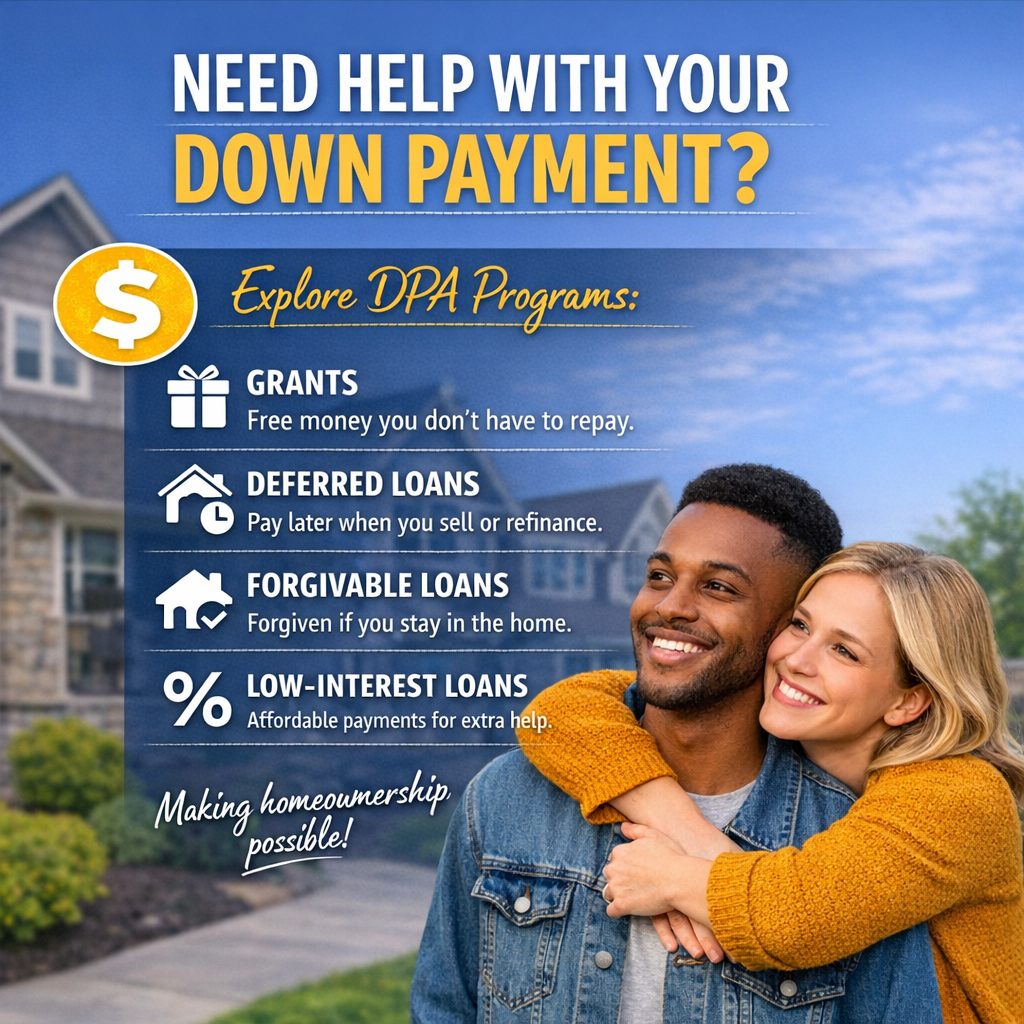
- Grants – Free money you don’t have to pay back. As long as you meet the program’s requirements, the money is yours and you don’t have to worry about a future repayment, no extra loan, just support to help you get into a home sooner.
- Deferred Loans – No payments until you sell, refinance, or pay off the home. You receive assistance upfront, but you don’t make monthly payments on it. Instead, the balance becomes due later (usually when you move, refinance, or finish paying off your main mortgage). Helps keep your monthly costs low in the beginning.
- Forgivable Loans – The balance disappears after you live in the home for a set number of years. These work like a loan at first, but if you stay in the home for the required time (often 3–10 years), the loan is forgiven. That means you don’t have to pay it back as long as you meet the occupancy rules.
- Low‑interest Loans – Extra funds with affordable repayment terms. This is additional money to help with your down payment or closing costs, but with a low interest rate and manageable monthly payments. Designed to make homeownership more accessible without adding a heavy financial burden.
What Else Should Buyers Know About DPAs?
- Not all programs are the same – Each program has its own rules and qualification criteria (e.g., income limits, credit requirements, property types, and whether you must be a first‑time buyer). A quick conversation with a lender can help match you to the right one.
- Funds can run out – Some programs have limited budgets or open/close throughout the year. Acting early helps buyers avoid missing out.
- You don’t have to be low‑income – Many people assume DPA is only for low‑income buyers, but plenty of programs support moderate‑income households too.
- Some programs require you to live in the home – Many DPA programs are meant for owner‑occupied homes, so buyers usually need to live in the property for a certain number of years to keep the benefit.
- It can affect your loan structure – The assistance might come as a second loan, a grant, or a forgivable loan. It is important to understand how it fits into your monthly payment and long‑term plan.
- You may need a homebuyer education course – Some DPA programs ask buyers to complete a short online class. It’s simple, helpful, and often required to unlock the assistance.
Why It Matters to You
DPA can lower your upfront costs, help you qualify sooner, and make the path to homeownership feel much more doable. To find out if you qualify for down payment assistance visit the Down Payment Resource Center and start the conversation with a trusted loan officer. For additional information and resources visit:
- Down Payment Assistance Programs: https://www.downpaymentassistanceprograms.com
- California Housing Finance Agency (CalHFA): https://www.calhfa.ca.gov/homebuyer/index.htm
- Fannie Mae HomeReady Mortgage: https://singlefamily.fanniemae.com/originating-underwriting/mortgage-products/homeready-mortgage


