
 Facebook
 X
X
 Pinterest
 Copy Link
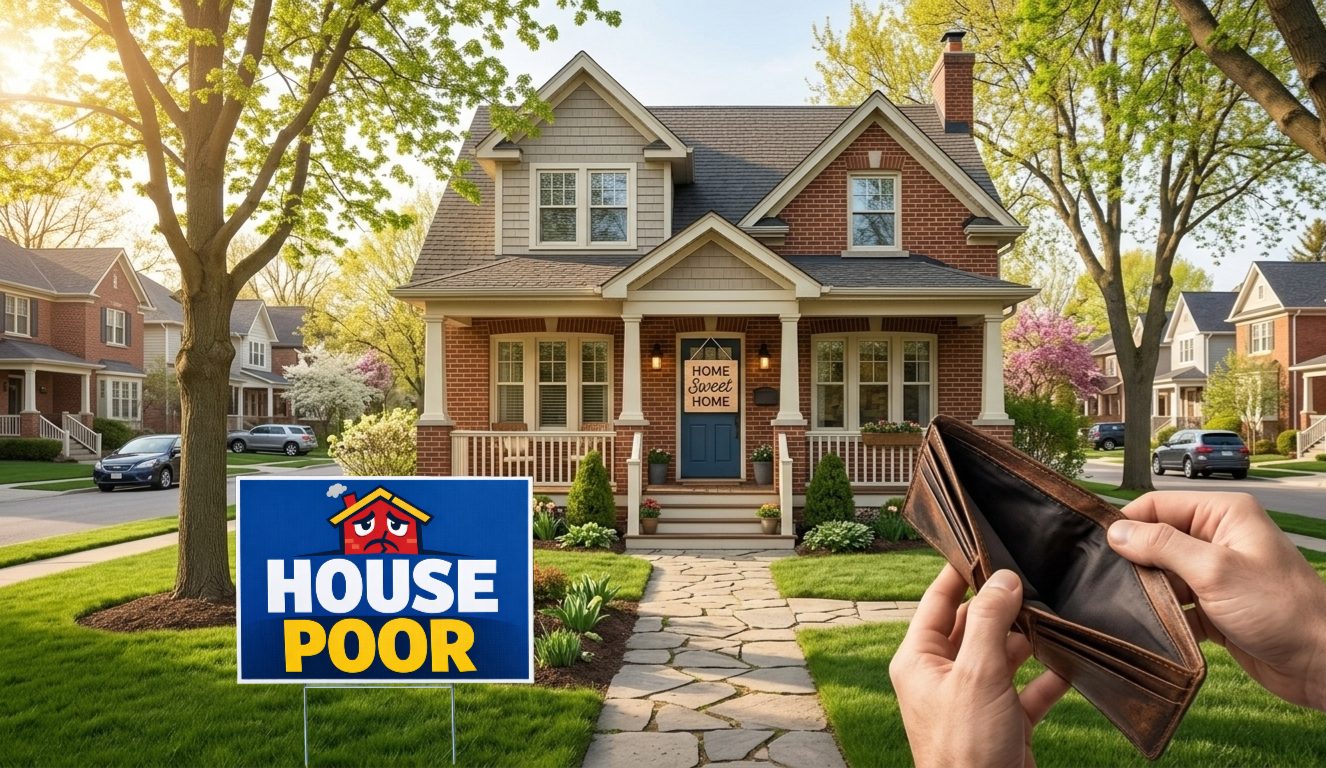
Becoming “house poor” happens when a buyer spends so much on their home that there’s little or nothing left for savings, emergencies, travel, hobbies, or even day to day comfort. Being “house poor” is a lot more common than people realize, especially in competitive markets such as Southern California, where emotional-purchasing run high and inventory is tight. The good news is that with the right strategy, homebuyers can protect their financial stability and still purchase a home they’ll love. To protect yourself and family from becoming house poor, consider the following:
- Start with a realistic, all‑in budget
Most buyers focus on the mortgage payment, but the true monthly cost of homeownership includes far more. A healthy budget accounts for:
- Property taxes (this can vary by city and can increase over time, and increase by ~2% annually)
- Special assessments (typically for newly developed communities)
- Homeowners insurance (much pricier if property is in wildfire and flood zone areas)
- HOA dues (management may potentially increase dues each year)
- Utilities (often higher than rentals)
- Home maintenance and repairs (big ticket items are roofs, HVAC systems, plumbing, landscaping)
- Lifestyle costs (retirement contributions, savings, travel, living expenses, childcare, etc.)
A good rule of thumb is to keep your total housing costs at or below 30–35% of your gross monthly income. But even that number should be personalized to truly satisfy your cost of living.
- Get Pre‑Approved for a loan but don’t treat it as your ultimate spending limit
A lender’s pre‑approval tells you the maximum loan amount you qualify for, not what you should spend. Most lenders don’t know your lifestyle, your goals, or your comfort level. They only see numbers so it’s up to you to inform them accordingly.
Instead of asking, “How much will the bank give me?” ask:
- “What monthly payment feels sustainable?”
- “How much do I want left over after bills?”
- “What financial goals do I refuse to sacrifice?”
This mindset shift alone prevents many buyers from stretching too far and not having sufficient funds to take care of the expenses listed above.
- Build a strong emergency cushion
Unexpected expenses are part of homeownership. A water heater can fail. A roof can leak. A car can break down the same month your property taxes are due.
To avoid stress, aim to keep minimum 3 to 6 months of living expenses in savings after your down payment and closing costs. If that feels out of reach, consider buying at a lower price point or delaying your purchase until you’re more financially prepared.
- Understand the true cost of “fixer‑upper” homes
A home that “just needs a little work” can be either a smart investment or a money pit that will fast track you into becoming house poor. Renovations often cost more than anticipated and take longer than planned. Before committing to buying the property, ensure to:
- Obtain detailed contractor estimates (at least 3 to compare)
- Inspection reports
- A realistic timeline
Always add a 10–20% buffer for surprises. If the numbers still work, great. If not, it may be wiser to choose a different home that’s move‑in ready.
- Avoid emotional overspending
It’s easy to fall in love with a home that stretches your budget, but emotional decisions can lead to long‑term financial strain. Here are some ways to help you stay grounded:
- Set your max budget before touring homes
- Revisit your financial goals weekly
- Compare each home to your non‑negotiables
- Remember: a home should support your life, not consume it
- Factor in future life changes
Your financial picture today may not be your financial picture in three years. Future life changes to consider include:
- Career changes
- Expanding your family
- Caring for aging parents
- Desire to travel more
- Retirement planning
- Increased medical expenses
A home that feels affordable today could feel tight later if you don’t plan accordingly. Choose a price point that gives you flexibility for the future.
- Don’t forget ongoing maintenance
A well‑maintained home protects your investment and prevents costly emergencies. A good guideline is to budget 1–2% of your home’s value per year for maintenance.
For a $600,000 home, that’s $6,000 to $12,000 annually. You may not spend it every year, but when you need it, you’ll be glad it’s there.
- Work with a realtor who prioritizes your financial health
A responsible real estate agent doesn’t push you to your limit, they will help you stay aligned with your goals. Always ensure to receive the following from your agent (if they are not providing this for you that’s a red flag):
- Market data
- Comparable sales
- Negotiation strategies
- Insight into hidden costs
- Guidance on when to walk away
The right agent helps you buy confidently, not anxiously. A responsible agent will not advise you to max out or push your budget.
- Choose a home that supports your life, not one that limits it
At the end of the day, the goal isn’t just to buy a home, it’s to build a life you love inside it. A home should give you stability, comfort, and room to grow. It should never take away your ability to enjoy your life, your family, or your future.
- Avoid choosing a home in a location that does not match your needs
Another hidden cause of becoming “house poor” may be choosing the wrong location. Buyers often fall in love with a house but forget that a neighborhood mismatch quietly drains money, time, and energy. Consider these critical lifestyle costs before you buy:
- Commuting Expenses (gas, tolls, and extra car maintenance add hundreds monthly)
- Social Isolation (long drives to see friends or eat out drastically increase entertainment costs)
- Childcare Logistics (poorly located schools force longer daycare hours and expensive daily drives)
The Bottom Line
A home isn’t just a financial purchase; it’s a lifestyle choice that comes with added expenses. Choosing a home that aligns with how you truly live, protects your finances, time, and long‑term happiness.
Avoiding becoming house poor isn’t just about the monthly mortgage, it’s about a) not stretching your budget too thin to the point that you can no longer afford your lifestyle, and b) understanding that the cost of homeownership is not a fixed cost. The unexpected will happen and a responsible homeowner needs to be financially prepared to account for such future expenses.
Look beyond the house and account for your lifestyle costs in addition to planned future expenses when deciding how much house you will buy. Remember, the loan amount you qualify for may not always be what you can truly afford. If you want a real estate agent that won’t guide you in the wrong direction, I’m here to help and happy to be part of your responsible home buying journey!


